Our Property
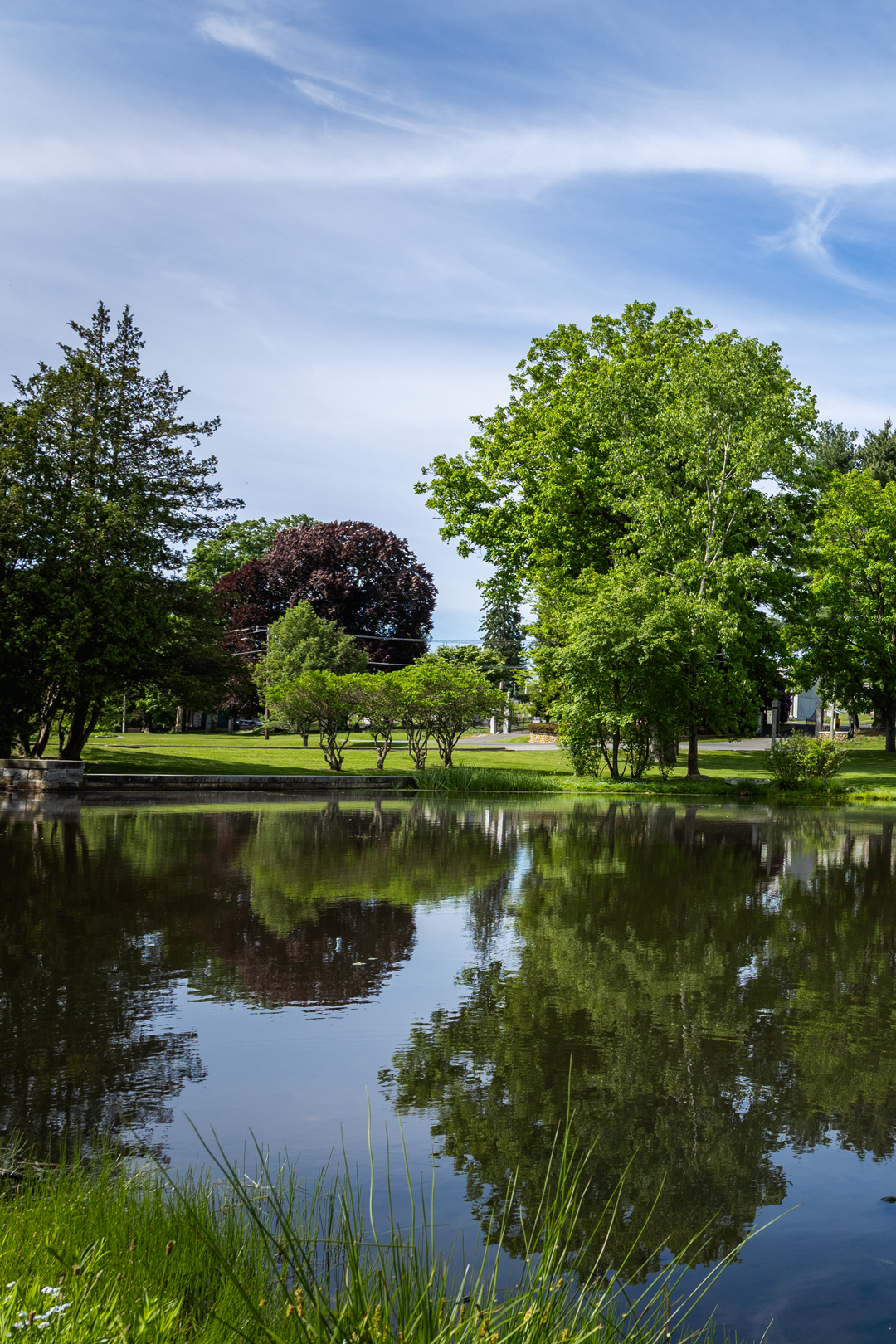
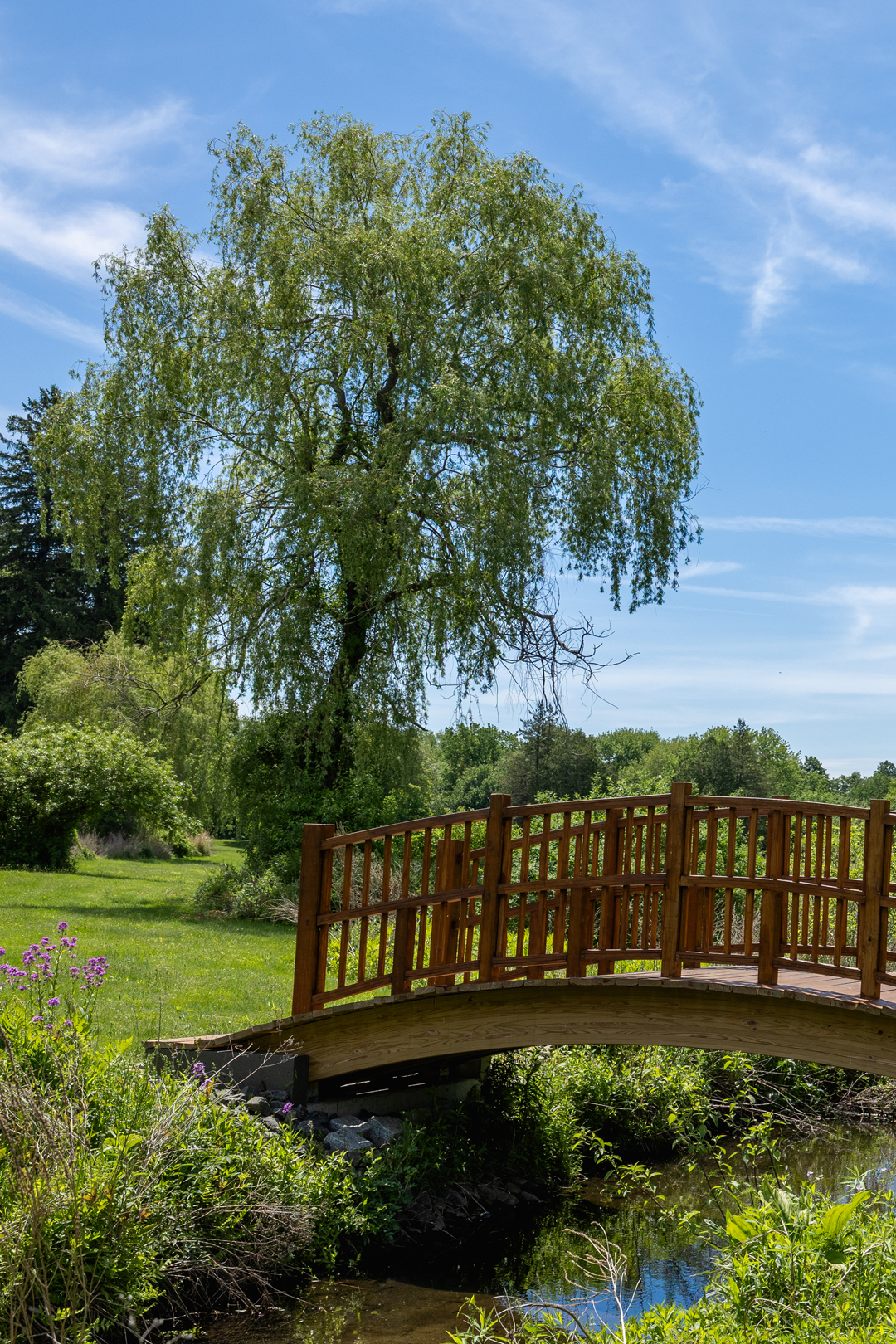
Our property includes two distinct spaces: the Village Cemetery itself, with its historic monuments and peaceful pathways, and Ram Pasture, a serene open field that serves as a graceful entrance to Newtown.

The Village Cemetery
Our Story Begins in 1709
When the proprietors of Newtown first laid out the new village in 1709, they set aside a 1.5-acre plot in the southwest corner for use as a burying ground. That small parcel is the oldest section of our cemetery today, and some of Newtown's earliest burials can still be found there.
By the early 1800s, the original ground had filled, and families began burying loved ones to the north and west, farther up the hill. Managing this growth required a more formal structure, and in 1860 the Newtown Village Cemetery Association was incorporated. The Association has owned and cared for the property ever since.
Cemetery Features
Please reach out with any specific requests, and we will try to accommodate if possible.
Cremation Burials
Columbarium Coming Soon
Our gates remain open for easy access.
Walk With Us
The Newtown Village cemetery grounds are open during the daytime for families to visit and pay their respects. We also welcome casual visitors to walk the property.
Historical Monuments
Many of Newtown’s earliest and well-known settlers are buried in the NVC. Here’s a few notables.
Mary Hawley
Robert Nelson Peck
A.F. Clarke
Scudder Smith
Alfred Briscoe
Cyrenius H. Booth
Glover Family
Charles Peck
Ram Pasture
A Town Common, a Family Legacy, and a Peaceful Welcome
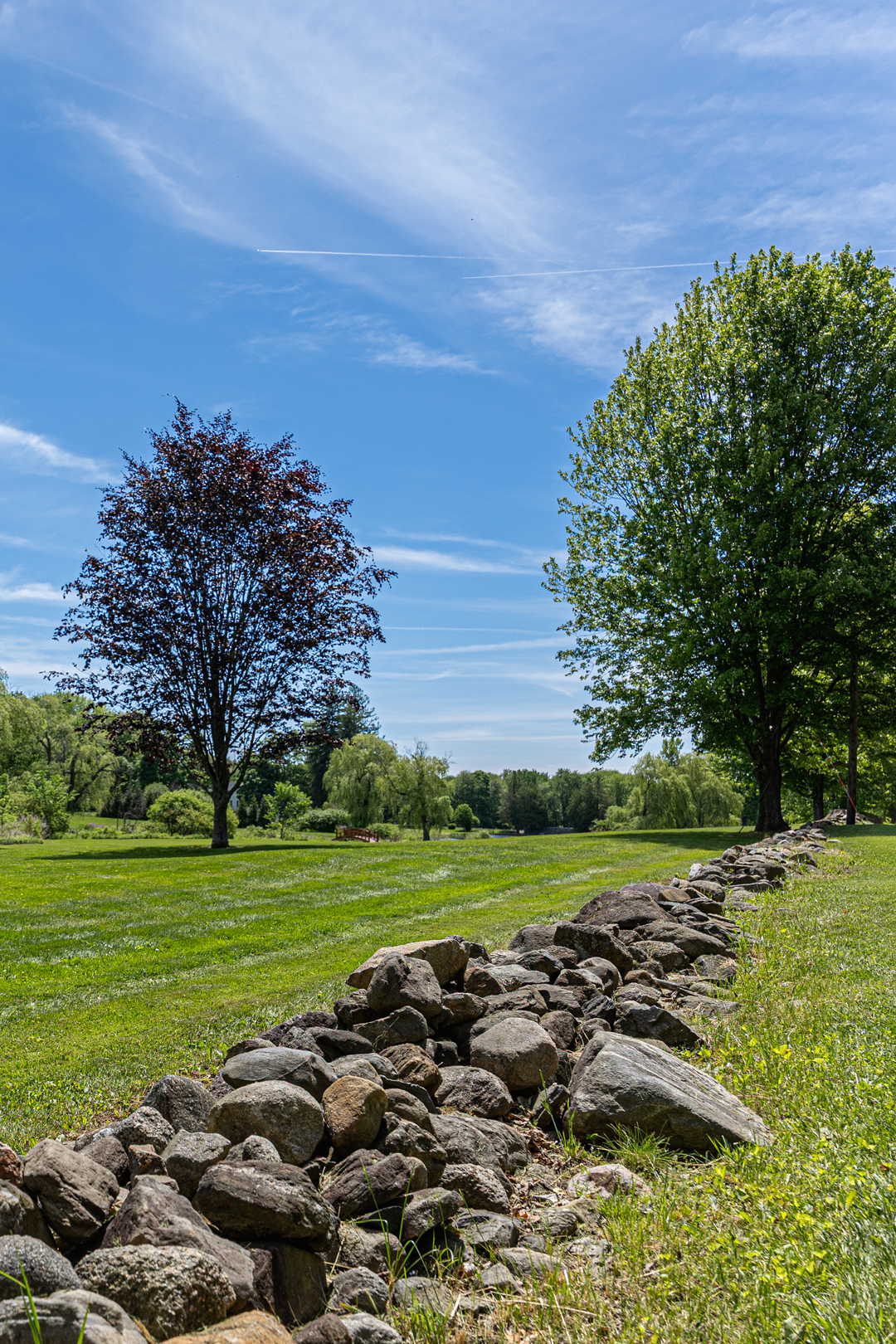
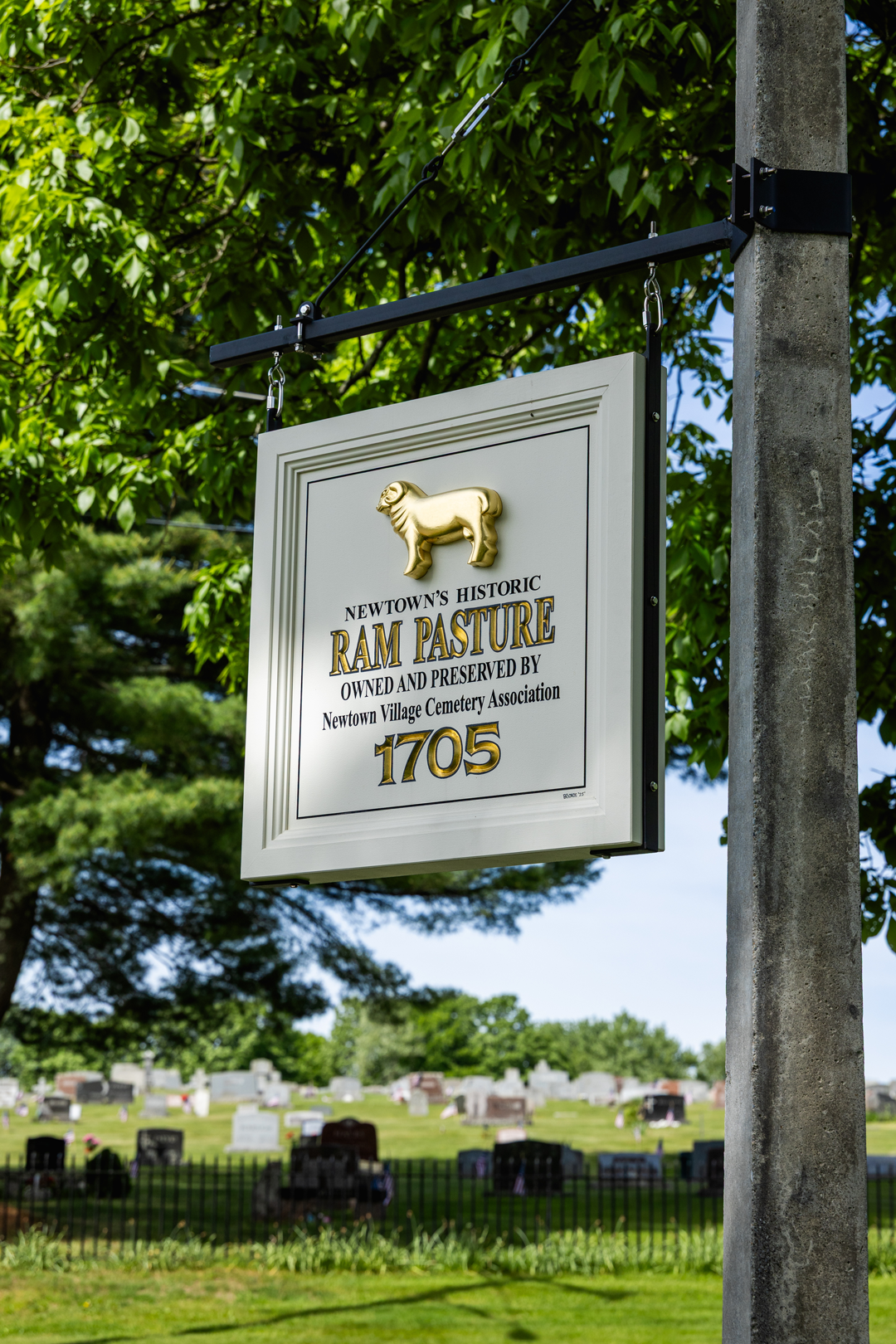
The open green field that greets visitors at the entrance to Newtown Village Cemetery is Ram Pasture. The land was originally part of the town common. After 1750, it was divided among several men who had provided special services to the town, including the first physician.
In 1920, Mary Hawley began quietly buying up pieces of the original common. Two of her ancestors — Cyrenius H. Booth and Judge William Edmond — had already acquired two-thirds of it, and those parcels she inherited. By 1926, she had assumed the full 12 acres.
Inspired by the one at Elizabeth Park in Hartford, Mary had envisioned a rose garden in Ram Pasture, though she died before that plan came to fruition. Today, it serves as a serene and welcoming entrance to the cemetery, a quiet green space with deep roots in Newtown's past.